

By: Teleah Grand DVM, CVA, CVFT, CVCH, CVTP
I had a dog named Freckles.
She would eat her food… but only after making a few adjustments.
Blueberries? Removed.
Carrots? Also removed.
She’d carefully line them up beside her bowl, look at me like I had personally offended her, and walk away with a dramatic little huff.
She ate well.
She drank well.
She maintained her weight.
She just had opinions.
Strong ones.
She lived to 17.5… so apparently, she wasn’t wrong about everything.
And Then There Are the “Picky Eaters” I See Every Day
Because most dogs I see labeled as “picky”…
don’t look like Freckles.
They don’t eat consistently.
They don’t maintain weight as easily.
They don’t just remove the vegetables and carry on with their day.
Instead, they:
- sniff the bowl and walk away
- eat one day and refuse the next
- need toppers, rotation, or encouragement
And over time, feeding becomes a negotiation.
Try this. Add that. Warm it up. Sprinkle something on top.
Until one day…
feeding your dog feels like managing a restaurant.
First Rule: Overweight Dogs Are Not Picky Eaters
I’m going to say this clearly:
If your dog is overweight, they are not a picky eater.

They may be selective.
They may be holding out for something better.
But they are not failing to eat because they can’t.
They’re choosing not to eat what’s offered.
And without realizing it, we often reinforce that.
We offer something new.
Then something better.
Then a treat “just so they eat something.”
And suddenly…
the dog is training the owner to be a short-order cook… and the owner is passing with honors.
At some point:
the dog stops being the picky one… and becomes the better negotiator.
And just to be clear:
Dogs who are truly not eating don’t gain weight.
Dogs who are negotiating… do just fine.
What a True Appetite Problem Looks Like
When there’s a real issue, it usually doesn’t look like negotiation.
It looks like:
- eating less overall
- consistent disinterest (not just selective refusal)
- weight loss (when you’re not trying)
- changes in energy, behavior, or GI function
That’s when we stop calling it picky…
and start asking why.
Behavioral… or Medical?
This is where things get tricky.
Because from the outside…
behavioral and medical problems can look identical.
A dog who won’t eat could be:
- holding out for something better
- mildly nauseous
- uncomfortable
- in pain
- dealing with a metabolic issue
- or some combination of all of the above
And at the food bowl?
They can look exactly the same.
Nausea Doesn’t Always Mean Vomiting

This is one of the most misunderstood pieces.
When people think of nausea, they think of vomiting.
But many dogs never vomit at all.
Instead, nausea can look like:
- interest in food… then walking away
- approaching the bowl, sniffing, then losing interest
- licking lips or seeming “off” around meals
- eating a little, then stopping
From the outside?
That looks exactly like a picky eater.
Sometimes the Only Way to Know Is to Try
We would LOVE to just ask them:
“Are you being selective… or do you feel a little queasy?”
We’ve never gotten a clear answer…
So sometimes, the way we sort it out is by response.
We may:
- adjust diet
- support the GI tract
- or treat for nausea
…and then see what changes.
If appetite improves quickly, that tells us something.
It doesn’t mean we stop there.
It means we’ve learned which direction to keep looking.
This is why we don’t guess

When something doesn’t quite add up, we don’t jump straight to:
- “it’s behavioral”
- or “it’s medical”
We start building a picture.
That may include:
- a thorough physical exam
- baseline lab work
- diet history
- sometimes additional or follow-up testing
Because not everything shows up on the first pass.
The goal isn’t just to get them to eat.
It’s to understand why they aren’t.
Weight Loss vs. Muscle Loss (Not the Same Thing)
This is an important distinction.
Weight loss (when appropriate)
In an overweight dog, controlled weight loss can be healthy.
It should be:
- gradual
- intentional
- monitored
Muscle loss
This is different.
Loss of muscle… especially along the spine, hips, or head… is not normal.
It can indicate:
- chronic disease
- inadequate nutrition
- metabolic imbalance
A dog can maintain weight… and still be losing muscle.
That’s not picky eating.
That’s a reason to look deeper.
Unintentional Weight Loss Is a Red Flag
If you are not trying to get your dog to lose weight…
and they are losing weight anyway?
That’s a medical problem until proven otherwise.
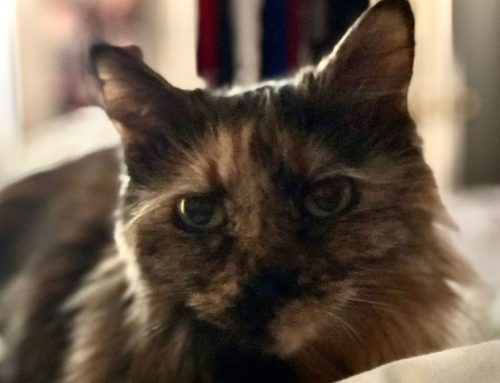
Cats Are NOT Small Dogs (And This Matters)
Cats do not tolerate NOT eating.
If a cat refuses food for 24–48 hours, that is not something to wait on.
Cats can develop a serious condition called hepatic lipidosis, where fat moves into the liver and interferes with normal function.
It can become life-threatening quickly.
If your cat isn’t eating, they need to be seen. Promptly.
No waiting. No hoping it resolves on its own.
What About Truly Picky Dogs?
They do exist.
But they’re less common than people think.
Most dogs will happily eat:
- treats
- table scraps
- high-value foods
while ignoring their balanced diet.
That’s not confusion.
It’s preference.
Most dogs don’t want a balanced meal for the same reason kids don’t want chicken and vegetables when nuggets and pizza are on the table.
It’s not that they don’t understand.
It’s that they’ve seen your backup plan.

A Very Familiar Pattern
Dog refuses balanced meal.
Owner offers something better.
Dog accepts.
Repeat that a few times and…
the dog learns that holding out works.
This isn’t stubbornness.
It’s effective training.
(From the dog’s perspective, it’s brilliant…)
So What Should You Do?
If your dog:
- is maintaining or gaining weight
- eagerly eats treats
- eventually eats when nothing else is offered
You’re likely dealing with a behavioral feeding pattern.
If your dog:
- is eating less overall
- is losing weight (without trying)
- has changes in energy, GI signs, or behavior
You’re likely dealing with a medical issue.
And sometimes?
It’s both.
The Takeaway
“Picky eater” is a convenient label.
But it’s not a diagnosis.
Sometimes it’s behavior.
Sometimes it’s physiology.
And sometimes it’s a mix of both.
The important part isn’t guessing which one.
It’s working the problem until you know.
Where We Start
At Animal Care Center at Stonebridge Ranch, we don’t just ask:
“How do we get them to eat?”
We ask:
“Why aren’t they eating?”
Because once you understand that…
everything else gets much easier.


Leave A Comment